
Discover the meaning of National Respect Your Cat Day, its origins, and how to build a deeper bond with your cat through trust, boundaries, and understanding.
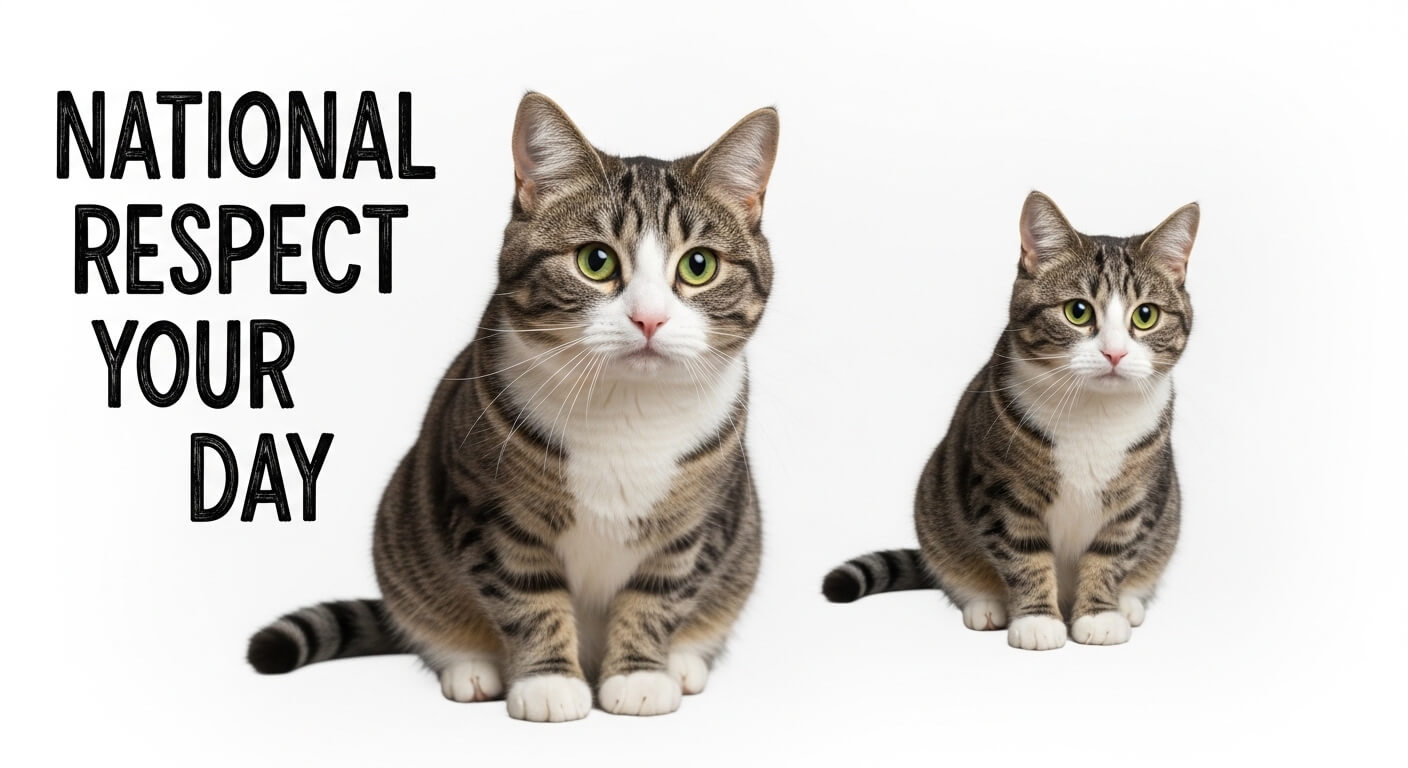
A Quiet Celebration of Boundaries, Mystery, and Mutual Trust
There is something undeniably enchanting about cats. They move through our lives with a quiet authority, never demanding attention yet somehow always commanding it. And perhaps that is exactly why National Respect Your Cat Day, celebrated annually on March 28, exists—not merely as a lighthearted observance, but as a gentle reminder that living with a cat is less about ownership and more about understanding.
The Origin of National Respect Your Cat Day
The story behind this day feels almost as mysterious as the animals it honors. While its exact origin isn’t tied to a single historical event, it emerged from a growing cultural awareness that cats are not like other domesticated animals. Unlike dogs, who often thrive on human direction and approval, cats maintain a sense of autonomy that dates back thousands of years to their ancestors in ancient civilizations.
In ancient Egypt, cats were revered as sacred beings, often associated with protection and divine energy. Harming a cat was not only frowned upon—it was punishable by severe consequences. This reverence has echoed through time, evolving into a modern understanding that cats are companions who choose us, not creatures we control.
National Respect Your Cat Day builds on this philosophy. It invites us to pause and reconsider how we interact with our feline companions—not as masters, but as respectful cohabitants in a shared space.
Understanding What “Respect” Means in a Cat’s World
Respect, in human terms, often involves politeness or admiration. But in a cat’s world, it has a far more nuanced meaning. Respecting a cat means acknowledging its boundaries, its instincts, and its unique personality.
Cats are territorial, sensitive, and highly perceptive animals. They communicate through subtle cues—tail flicks, ear positions, slow blinks. Ignoring these signals can lead to stress or defensive behavior. But when you learn to read them, something remarkable happens: a silent dialogue begins.
Imagine sitting quietly while your cat approaches you, choosing to curl up beside you rather than being picked up. In that moment, trust is not forced—it is offered. And that is the essence of respect.
The Psychology of Cats: Independence vs. Connection
One of the most misunderstood aspects of cats is their independence. Many people interpret it as aloofness or indifference. But in reality, cats form deep emotional bonds—just on their own terms.
Scientific studies have shown that cats can develop attachment styles similar to humans and dogs. They recognize their owners’ voices, respond to emotional cues, and even mirror moods. However, unlike dogs, they do not constantly seek validation. Their affection is quieter, more selective.
This duality—independent yet emotionally aware—is what makes cats so intriguing. National Respect Your Cat Day encourages us to embrace this complexity rather than trying to reshape it.
Daily Habits That Reflect True Respect
Respecting a cat isn’t about grand gestures; it’s about consistent, mindful behavior. It’s in the way you allow your cat to initiate interaction. It’s in the patience you show when they retreat to a quiet corner. It’s in the understanding that a swishing tail is not an invitation, but a warning.
Even feeding routines carry meaning. Cats thrive on predictability. Maintaining a stable environment and routine is one of the most profound ways to show respect, as it aligns with their instinctual need for security.
Then there is play—an often overlooked form of respect. Engaging a cat in play mimics hunting behavior, fulfilling both physical and mental needs. It’s not just entertainment; it’s a recognition of who they are at their core.
The Cultural Symbolism of Cats
Across cultures, cats have symbolized everything from mystery and magic to independence and protection. In Japanese folklore, the “Maneki-neko” (beckoning cat) is believed to bring good fortune. In European traditions, cats have been associated with both superstition and wisdom.
These symbolic roles highlight a universal truth: cats have always occupied a space between the ordinary and the mystical. National Respect Your Cat Day taps into this long-standing fascination, reminding us that living with a cat is, in many ways, sharing space with a creature that refuses to be fully understood.
Common Mistakes People Make with Cats
Despite good intentions, many cat owners unknowingly cross boundaries. Picking up a cat without warning, interrupting sleep, or forcing interaction can create stress. Unlike more overtly expressive animals, cats may not immediately show discomfort—but they remember.
Respect requires observation. It requires slowing down and paying attention to subtle signals. A cat turning its head away, flattening its ears, or flicking its tail is communicating clearly—just not loudly.
Understanding these signals transforms the relationship. What once felt unpredictable becomes intuitive. What once felt distant becomes deeply connected.
Building a Relationship Based on Mutual Trust
Trust with a cat is not built overnight. It is layered, gradual, and incredibly rewarding. Each small moment—each gentle approach, each respected boundary—adds to a foundation of safety.
Over time, this trust reveals itself in quiet ways. A cat may begin to follow you from room to room, sit beside you during quiet moments, or greet you at the door. These are not random behaviors. They are signs of a bond that has been earned, not imposed.
National Respect Your Cat Day is, at its heart, about recognizing and nurturing this bond.
Why This Day Matters More Than Ever
In a fast-paced world where control and convenience often dominate, cats remind us of something different. They remind us to slow down, to observe, and to accept that not everything can—or should—be controlled.
Respecting a cat is, in many ways, a lesson in respecting individuality itself. It teaches patience, empathy, and the value of silent connection.
As more people welcome cats into their homes, this message becomes increasingly important. National Respect Your Cat Day is not just about cats—it’s about how we choose to relate to the living beings around us.
Final Reflection
There is a quiet kind of magic in earning a cat’s trust. It cannot be bought, rushed, or demanded. It must be understood, honored, and patiently built.
So on March 28, take a moment. Sit a little more quietly. Watch a little more closely. Let your cat come to you—not because it has to, but because it wants to.
And in that moment, you’ll understand what this day is truly about:
Not just loving your cat—but respecting the soul within it.

